



IELSGC

The Philosophy Behind Language Ownership

Our Mission

The mission of IELSGC is to redefine language competence as a measurable professional capability that enables individuals and organizations to operate, decide, collaborate, and lead effectively in global contexts.
IELSGC exists to move language assessment beyond academic performance and toward real-world communicative impact, ensuring that English serves as a tool for action, not merely certification.

In practical terms, IELSGC’s mission is to:
  • Validate what people can actually do with English at work

  • Reduce professional, operational, and reputational risks caused by miscommunication

  • Provide employers and partners with reliable, actionable evidence of communicative competence

  • Support continuous professional growth through diagnostics, training, and certification

IELSGC Vision

IELSGC envisions a global professional ecosystem where language competence is treated with the same rigor, structure, and credibility as other professional disciplines.

Much like project management, finance, or quality assurance, IELSGC’s vision is for professional communication to be:

  • Standardized (clear benchmarks and frameworks)

  • Auditable (evidence-based, not subjective)

  • Evolving (continuously developed, not static)

  • Trusted globally by employers, institutions, and professionals

  • The mission and vision of IELSGC are not separate statements; they are structurally integrated through the system itself.

    1. From Mission to Structure
      The mission to validate real-world performance is realized through integrated assessments, workplace simulations, and competency-based diagnostics—ensuring that vision is embedded in practice.

    2. From Vision to Standards
      The vision of a global professional ecosystem is operationalized through standardized frameworks, tiered certifications, and auditable competency portfolios.

    3. From Individual Impact to Systemic Change
      IELSGC’s mission focuses on empowering individuals to perform; its vision scales this impact by enabling organizations, partners, and industries to rely on consistent communication standards.

    4. From One-Time Proof to Continuous Evolution
      The mission of competence validation feeds directly into the vision of lifelong development through diagnostics, targeted training, and periodic reassessment.

Far far away, behind the word mountains, far from the countries Vokalia and Consonantia, there live the blind texts. Separated they live in Bookmarksgrove right at the coast

The 5 Pillars of IELSGC Assessment

These pillars define what “Global Competency” actually looks like in our framework.
Integrated Processing

You never use one skill in isolation. Real life requires you to read, discuss, and write—all connected.

“Input-to-Output Looping”

error, est. Ea, consequatur.

Contextual Intelligence

Language changes based on who you’re talking to and where you are.

“Register Shifting”

Vocational Operationality

English as a trade tool. Can you successfully complete the task?

“Task Completion”

Strategic Interaction

Communication is two-way. Can you handle misunderstandings and repair conversations?

“Repair and Clarification”

Global Intelligibility

Clarity over mimicry. Can a global audience understand you effortlessly?

“International Comprehensibility”

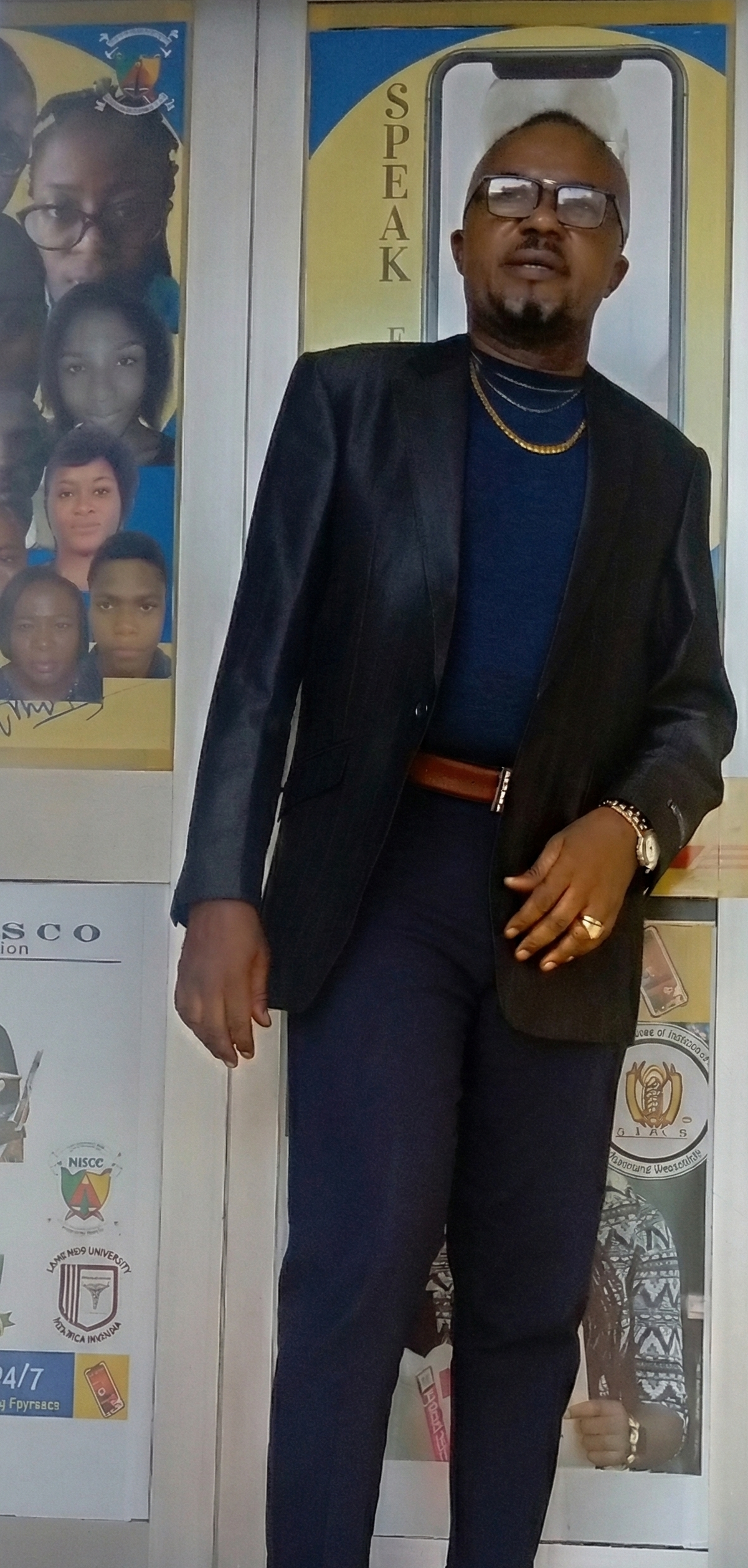
protus NJI - Founder & CEO

Language Ownership vs. Language Rental

  • Own the Language

    Internalize English as a natural extension of your identity

  • Contextual Mastery

    Use language effectively in real professional scenarios

  • Lifelong Competency

    Skills that stay with you beyond the test

IELSGC

Makes me Realize how much I haven’t Seen

Institutional Backing

WESCO Cameroon The Vocational Anchor

Enjoy every moment of your life. We’re available for travel photo assignments worldwide.

TESOL Africa The Global Standard

TESOL Africa provides the international framework, ensuring IELSGC meets global standards while remaining contextually relevant to Africa.

Frequently
Asked Questions

IELSGC Post

Follow Us

Ways You Can Promote Team Collaboration

Ways You Can Promote Team Collaboration

IELSGC promotes team collaboration by addressing the communication structures that determine how teams actually work, not merely how individuals speak. First, IELSGC establishes a shared communicative standard within teams. By aligning members around the same expectations for clarity, tone, and task-oriented communication, it reduces misunderstandings that typically arise from inconsistent language use, hierarchy confusion, orWays You Can Promote Team Collaboration


7 Tips To Become A Natural Speakers

7 Tips To Become A Natural Speakers

Think in Tasks, Not in Sentences Natural speech emerges when language is used to solve problems. Focus on completing real tasks (explaining delays, proposing solutions, negotiating next steps) instead of constructing perfect sentences.Integrate Input Before Output Speak only after you have understood the situation. Read, listen, extract intent, then respond. This input-to-output loop reduces hesitation7 Tips To Become A Natural Speakers

Better Ways To Do Your Brainstorming

Better Ways To Do Your Brainstorming

IELSGC improves brainstorming by transforming it from an unstructured conversation into a clear, inclusive, and outcome-driven collaborative process, especially in multilingual and professional environments. First, IELSGC equips participants with shared cognitive and linguistic frameworks. When team members are trained to process input, frame ideas, and respond purposefully, brainstorming sessions shift from scattered opinions to structuredBetter Ways To Do Your Brainstorming

Call to Action with Image

Add beautiful boxes with title, image and button and encourage users to take action.

Create your own

Beautiful Landing Page with Elements

Our Consultants

Meet our team of expert business consultants

Rose Merry

Research Consultant

Sarah Tylor

Research Consultant

Jonathon Smith

Research Consultant

Aikin Ward

Research Consultant

Jonathon Smith

Research Consultant

Rose Merry

Research Consultant

Sarah Tylor

Research Consultant

Jhon Deo

Research Consultant